
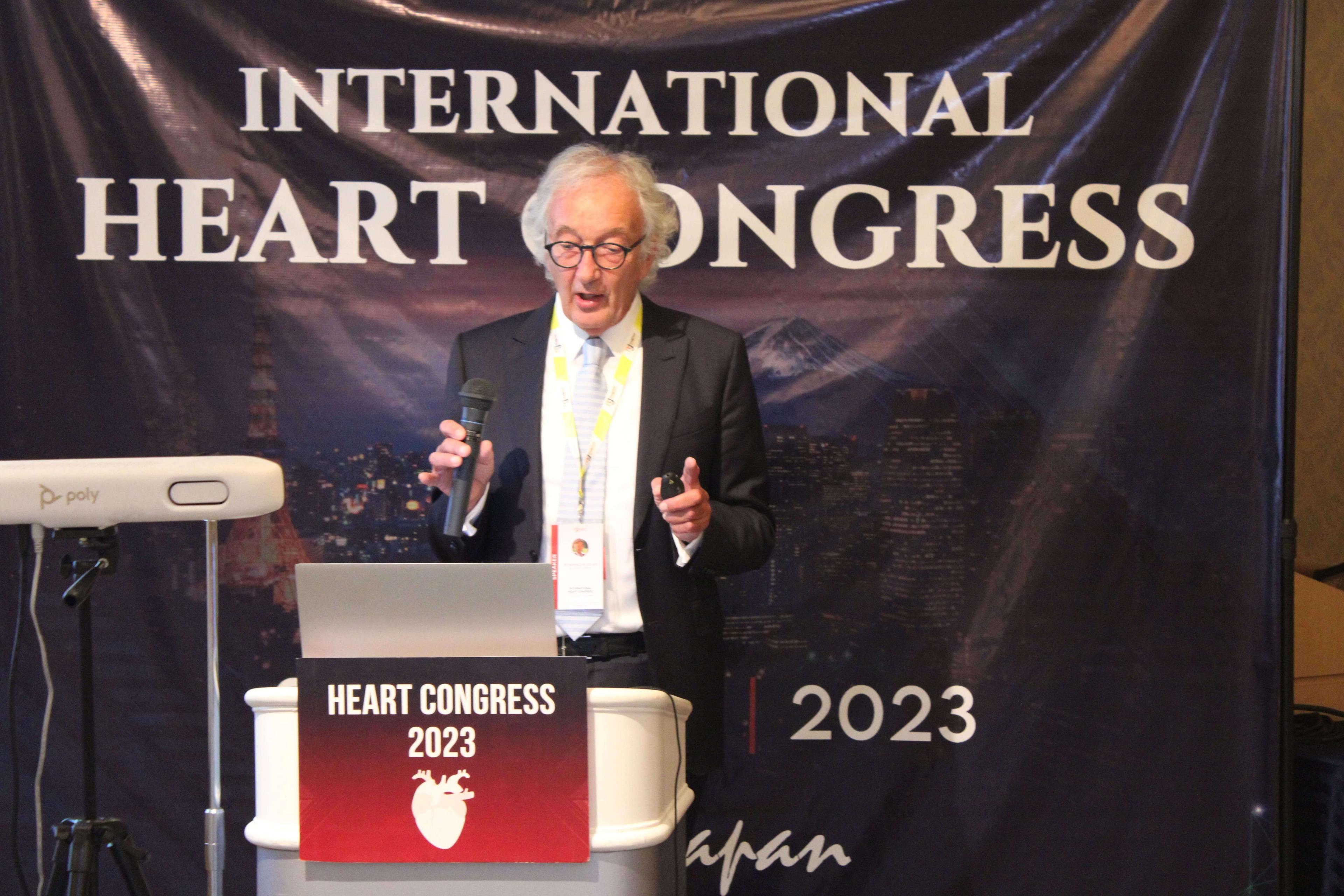
The full Heart Congress 2026 scientific program across 3 days — keynotes, oral presentations, and posters. Talks are ordered by program prominence within each day.
Day 1
- Keynote
Novel mechanisms and new therapeutics for right heart failure in pulmonary hypertension
Yong Xiao Wang · Albany Medical College, United States
Right ventricular remodeling and associated right heart failure (RHF) are common and severe cardiovascular diseases. These diseases often occur in pulmonary hypertension (PH). PH and associated RHF are widespread…
- Keynote
Fats of life, the skinny on novel lipid therapies beyond statins
Ahdy Wadie Helmy · Indiana University School of Medicine, United States
With Cardiovascular disease still the primary killer of adults globally, tackling lipid disorders has proven extremely useful from the statins experience since the early nineties. However, goals are not met regarding…
- Keynote
Beyond PCSK9: The next wave of lipid-lowering and thrombosis prevention - from bench to breakthrough
Narendra Kumar · HeartbeatsZ Academy, United Kingdom
In 2015, we celebrated PCSK9 inhibitors. In 2026, we're potentially approving FOUR revolutionary drug classes simultaneously. But will they succeed where others failed?" First, we examine Factor XI/XIa inhibition as a…
- Keynote
Personalized and Precision Medicine (PPM) and PPN-guided cardiology practice as a unique model via translational applications and upgraded business modeling to secure human healthcare, wellness and biosafety
Sergey Suchkov · N. D. Zelinskii Institute for Organic Chemistry of the Russian Academy of Sciences, Russian Federation
A new systems approach to diseased states and wellness result in a new branch in the healthcare services, namely, Personalized and Precision Medicine (PPM). The pace of inno-vation in Personalized & Precision Cardiology…
- Keynote
circHIPK3 regulates nucleolin phase separation in aging: Insights from AI-driven predictionandexperimental validation
Yangxin Li · Soochow University, China
Cardiac aging is closely linked to cardiomyocyte (CM) senescence. Ribosome biogenesis plays acritical role in triggering CM cell cycle reentry; however, the specific activators and upstreamregulatorsofthis process…
- Keynote · Virtual
Legionella pneumonia complicated by fulminant myocarditis
Faizan Butt · Rutgers Jersey City Medical Center, United States
Background: Legionella pneumophila is a well-recognized cause of severe community-acquired pneumonia, particularly in patients presenting with hyponatremia and systemic inflammatory features. While pulmonary…
- Keynote · Virtual
Impact of preoperative COVID 19 infection on myocardial injury and outcomes after aortic valve surgery in the pre vaccination era
Mohammed Hashem · Karolinska Institutet, Sweden
Background: The long-term impact of preoperative SARS-CoV-2 infection on patients undergoing surgical aortic valve replacement (SAVR) remains insufficiently defined, particularly in the pre-vaccination era. This study…
- Oral
Anomalous left main coronary artery from the right coronary cusp with intraconal course and ostial stenosis in an elderly patient: A case report
Abdullah Muhammad Nasser · University of Toledo, United States
Background: Anomalous aortic origin of a coronary artery (AAOCA) is a rare congenital anomaly associated with myocardial ischemia and sudden cardiac death. The risk is particularly significant when the left main…
- Oral
Current approaches to anti-angina drug treatment in Chronic-stable Angina Pectoris (CSAP) in US primary care and cardiology – A cross-sectional, blinded standard-of-care survey
Uwe Peter Tigor · Auxilius Pharma, United States
Background : Availability and use recommendations of anti-anginals in chronic-stable angina pectoris (CSAP) has changed little since the last anti-anginal was FDA approved in 2006. Recent large outcomes studies have…
- Oral
Cocaine induced Accelerated Idioventricular Rhythm (AIVR)
Faizan Butt · Rutgers Jersey City Medical Center, United States
Introduction: Cocaine-induced cardiotoxicity is a well-recognized phenomenon associated with a broad spectrum of cardiovascular complications, including arrhythmias. We present a case of a 26-year-old male with a…
- Oral
The exploration of lived experiences and the associated relationship with physical activity and exercise for individuals with ANOCA
Kayleigh Jarrett · Robert Gordon University, United Kingdom
Background: Angina with No Obstructive Coronary Artery disease (ANOCA) is an umbrella term encompassing multiple underlying pathologies. Unlike traditional coronary artery disease (CAD), it is a complex condition…
- Oral
A fitting pipeline to reproduce the dynamic of high complexity electrophysiology models
Hector Velasco Perez · KU Leuven, Belgium
In the last 30 years, people have devoted great efforts to generate models that reproduce the electrophysiological complexity of patient hearts. These models are referred to as digital twins and require a large number…
- Oral
Coronary disease in women
Cristina Milagre Quadros Borges · Heart Hospital - Hcor, Brazil
Cardiovascular diseases (CVD) correspond to the main cause of death worldwide in both genders. There was an increase in the prevalence of CVD in the last 30 years in young people aged 15-49 years, of both genders with…
- Oral
Antibodies with functionality as a new generation of translational tools designed to monitor autoimmune myocarditis at clinical and subclinical stages
Sergey Suchkov · N. D. Zelinskii Institute for Organic Chemistry of the Russian Academy of Sciences, Russian Federation
Catalytic Abs (catAbs) are multivalent Immunoglobulins (Igs) with a capacity to hydrolyze the Antigenic (Ag) substrate. In this sense, proteolytic Abs (Ab-proteases) represent Abs to pro-vide proteolytic effects. Abs…
- Oral
Perception of cardiovascular risk in women after a rehabilitation program
Maria Teresa Carvallo Marin · University of Chile, Chile
Introduction: After suffering a serious car- diovascular event (CV), cardiac rehabilitation is a process in which the patient establishes a close through a post-CV rehabilitation process. Stress was mentioned as the…
- Oral
Molecular mechanisms of skeletal muscle regeneration after ischemia reperfusion injury
Yao Hua Song · Fuwai Yunnan Hospital, China
Skeletal muscle is a dynamic tissue endowed with exceptional plasticity and robust regenerative potential, which largely depends on satellite cells (SCs) residing between the muscle basement membrane and sarcolemma. The…
- Oral
Analysis of myocardial phase separation mechanisms driven by AI and thermodynamic laws and their clinical translation
Yangxin Li · Soochow University, China
Heart failure remains a major global cause of morbidity and mortality. A significant challengeincardiac regeneration is the inability to generate new cardiomyocytes (CMs) through cell division, whichmaybe linked to…
- Oral
A study of clinical profile of raised NT-proBNP in elderly patients with good LV systolic function
Nidhish Niranjan Nisty · Nisty Heart Centre, India
Introduction: NT-proBNP (N-terminal pro-B-type Natriuretic Peptide) is a blood test used mainly to diagnose and monitor heart failure. It measures a hormone released by the heart when the heart muscle is stretched due…
- Oral
Determination of significant change in right ventricular strain among patients with rheumatic mitral stenosis after percutaneous transvenous mitral commissurotomy
Maria Antonette Bernal Gelindon · Philippine Heart Center, Philippines
Introduction : Application of strain echocardiography in Rheumatic Mitral Stenosis (MS) allows new insight in evaluation of cardiac function. The aim of this paper is to describe the significant change in right…
- Oral
An Uncommon case of pericarditis after transcatheter aortic valve replacement: The first reported case in Korea
Yu Jin Chung · Konkuk University Hospital, Korea, Democratic People's Republic of
Although transcatheter aortic valve replacement (TAVR) has become a favorable option for severe aortic stenosis in older patients, post-procedural complications still exist. Commonly known complications include…
Day 2
- Keynote · In-Person
Characterizing cardiac ECG and echocardiographic abnormalities in cirrhotic patients with and without heart failure
Ishan Abdullah · George Washington University School of Medicine and Health Sciences, United States
Background: Liver cirrhosis is associated with characteristic Electrocardiographic (ECG) and cardiac structural abnormalities, including QTc prolongation and low voltage. In those with heart disease, these changes are…
- Keynote · In-Person
BMI-specific associations between atherogenic index of plasma and atherosclerotic cardiovascular disease in young adults: A nationwide cohort study
Heesun Lee · Seoul National University Hospital, Korea, Republic of
Background: The atherogenic index of plasma (AIP), derived from the triglycerides/high-density lipoprotein cholesterol ratio, reflects the balance between atherogenic and protective lipoproteins. Although it has been…
- Oral · Virtual
Historical evolution from OPCAB to MIDCAB to mini OPCAB surgical technique and results
Federico Benetti · Benetti Foundation, Argentina
Between 1970 and 1980 there were experiences and series of patients operated on Direct Coronary Surgery without the use of extracorporeal circulation. During the 80 and 90 the Technique was developed. The MIDCAB was the…
- Oral · Virtual
Analysis of cardiovascular risk factors in patients with type 1 diabetes mellitus
Mekhman N Mamedov · National Research Center for Preventive Medicine, Russian Federation
The aim of the study: was to analyze the characteristics of risk factors (RF) for cardiovascular disease (CVD) in individuals with type 1 diabetes mellitus. Materials and Methods: This cross-sectional multicenter study…
- Oral · Virtual
Pharmacological advancement in pulmonary arterial hypertension treatment - Contribution of treprostinil dry-powder formulation
Miroslav Radenkovic · University of Belgrade, Serbia
Pulmonary Arterial Hypertension (PAH) is still a devastating illness with substantial morbidity and death outcomes. Taking into account that the disease advances quickly for many patients, and is commonly associated…
- Poster
Severe QT prolongation and torsades de pointe in panhypopituitarism: A reversible endocrine crisis
Shahe Tchillingirian · Icahn School of Medicine at Mount Sinai, United States
Torsades de Pointe (TdP) is a fatal arrhythmia that is a potential sequela of a prolonged QT interval. Most cases of TdP arise from medication-induced or congenital prolonged QT 1 . This case highlights an…
- Poster
SGLT2 inhibitors after myocardial infarction: Beyond glycemic control to inflammasome modulation
Desislava Doycheva · Loma Linda University, United States
Heart failure remains a major complication following myocardial infarction (MI), driven in part by sterile inflammation and adverse ventricular remodeling. While sodium-glucose cotransporter-2 (SGLT2) inhibitors have…
- Poster
Atypical takotsubo cardiomyopathy presenting as st-elevation myocardial infarction
Sana Tariq · Manchester University NHS Foundation Trust, United Kingdom
A 64-year-old woman with a history of diverticulosis and duodenal ulcer presented with classic signs and symptoms of ST-elevation myocardial infarction (STEMI), including chest pain typical of cardiac origin, ST…
- Poster
Gender differences in cardiac structure between older men and women
Ieva Malinauskaite · Luzern Hospital, Switzerland
Background: Gender differences in cardiac structure may reflect body size and comorbidity patterns and have implications for diagnosis and risk stratification in older adults. The aim is to compare left ventricular wall…
- Poster
Gender difference in cardiac structure between older men and women
Mindaugas Malinauskas · Klaipeda City Multispecialty Clinic, Lithuania
Background: Gender differences in cardiac structure may reflect body size and comorbidity patterns and have implications for diagnosis and risk stratification in older adults. The aim is to compare left ventricular wall…
- Poster
Arterial and venous thrombolysis with a new modified JG microplasmin
Agustin Joison · Cordoba Catholic University, Argentina
Introduction: The fibrinolytic activity in human plasma was subsequently shown to depend on activation of a plasminogen as precursor. As plasmin derives from plasminogen, it is possible that microplasmin also has a…
- Poster
ECHO-VIEWER: An AI-platform for real-time echocardiography data interpretation in experimental and clinical settings
Nawaf AM Alharbi · Sulaiman Al Rajhi University, Saudi Arabia
Background: Transthoracic echocardiography (TTE) remains the mainstay non-invasive modality for cardiac assessment in clinical practice and experimental HF models, with over 7 million U.S. studies/year. However…
- Poster
LKB1-AMPK signaling pathway in cardiovascular diseases
Guo Wei He · Tianjin University, China
The LKB1–AMPK signaling pathway is a core regulatory axis of cellular energy homeostasis and a pivotal hub in stress adaptation. As an evolutionarily conserved metabolic sensor, this pathway coordinately regulates…
- Poster
Implementation of vector based approach using cardiac vector theory in mobile ECG application to improve ECG Competence for Junior Medical Professionals
T Rajini Samuel · Shri Sathya Sai Medical College and Research Institute, India
Introduction: Mobile ECG applications detect the heart's electrical signals from the skin surface using the electrodes and sensors. The signals are amplified and then filtered to remove artifacts. The software…
- Poster
Herbal and natural product-based interventions in cardiovascular disease management
Geeta Deswal · Guru Gobind Singh College of Pharmacy, India
Cardiovascular diseases (CVDs) remain a leading cause of global morbidity and mortality, necessitating the exploration of complementary and integrative therapeutic strategies alongside conventional pharmacotherapy.…
- Poster
Embracing ayurveda: A new era in heart disease care
Prashant Sakharam Bhokardankar · Datta Meghe Ayurved College, India
The prevalence of cardiovascular diseases (CVDs) has significantly increased in recent years due to environmental changes, heavy diets, and lifestyle modifications. As a result, the term "hridroga," which refers to…
- Poster
Vascular risk: Prediction is the mother of prevention
Debprasad Dutta · Mazumdar Shaw Medical Foundation, India
In vascular medicine, the greatest challenge is not the complexity of the disease, but the silence with which it evolves. We must now harness predictive intelligence to break that silence. This presentation posits that…
- Poster
New textile materials in cardiovascular tissue replacement and repair
Narayanan Gokarneshan · SSM College of Engineering, India
In cardiovascular therapeutics, procedures such as heart transplants and coronary artery bypass graft are pivotal. However, an acute shortage of organ donors increases waiting times of patients, which is reflected in…
- Poster
Predictors of sudden death in congenital arrhythmogenic syndromes
Samir Rafla · Alexandria University, Egypt
Genetic heart diseases are common causes of sudden cardiac death (SCD) in the young and are typically divided into inherited cardiomyopathies and primary electrical heart diseases. Cardiomyopathies associated with the…
- Poster
Yasser’s electrocardiographic palpitations wave with bilobed apical floating heart syndrome in Yasser’s fibrillation-a strange innovative cardiovascular and radiological discoveries-a case report
Yasser Mohammed Hassanain Elsayed · Egyptian Ministry of Health, Egypt
Rationale : Atrial fibrillation (AF) is the most common arrhythmia. It is known leading cause of ischemic cerebrovascular accidents. Yasser’s fibrillation (sinusoidal AF) or mixed AF is a new cardiovascular discovery.…
- Poster
Modulation of erythrocyte mobility using magnetite nanoparticles: A nanomedical perspective for critical care and transfusion therapy
Andrey Belousov · Kharkiv National Medical University, Ukraine
A decrease in erythrocyte electrophoretic mobility serves as an important diagnostic marker of pathological conditions associated with impaired gas exchange, microcirculation, and tissue trophism, often leading to…
Day 3
- Oral · Virtual
Movement is medicine
Steve Cohen · Medvesta Hypnosis Healthcare, United States
This keynote highlights how movement as medicine supports the goals of the Cardiology World Conference 2026 by emphasizing innovative, preventive approaches to heart health. For cardiologists, cardiovascular surgeons…
- Oral · Virtual
Novel ways of cardiovascular risk assessment
Syed Raza · Awali Hospital, Bahrain
Cardiovascular disease (CVD) is the leading cause of death and disability worldwide. The primary prevention of CVD is dependent upon the ability to identify high-risk individuals long before the development of overt…
- Oral · Virtual
Cardiovascular nanomedicine: Stopping strokes, unclogging arteries and restoring heart function
Thomas J Webster · Brown University, United States
Nanomedicine, or the use of materials with at least one dimension less than 100 nm, has led to improved disease prevention, diagnosis, and treatment. This talk will cover recent advances in the use of nanomaterials to…
- Poster
Heart transplant rejection: From endomyocardial biopsy to molecular testing and pediatric considerations
Abhinav Grover · University of Pennsylvania, United States
Background: Heart transplantation remains the definitive therapy for end-stage heart failure, but allograft rejection continues to be a major cause of morbidity and graft dysfunction. Traditional surveillance has relied…
- Poster
Doppler ultrasound measurement of central artery stiffness and elasticity in cardiovascular disease
Trevor Tucker · Dynamic Vascular Resolution Inc., Canada
Introduction: Central artery elasticity is a measure of the artery’s response to the impulse of blood expelled from the left ventricle. The Doppler ultrasound measurement of central artery flow velocity, and its…
- Poster
Beyond data: Behavioural economics and AI in cardiovascular care
Iris Panagiota Efthymiou · Regent College London, United Kingdom
Cardiovascular disease accounts for approximately 18 million deaths annually, yet up to 80% of premature cardiac events are preventable, and medication adherence in chronic cardiovascular conditions remains at just…
- Poster
“Joint option II”: Doctors can apply Care as Usual (CAU) if scientists and nurses use Pragmatic Controlled Trials (PCTs) to analyse outcomes
Franz Porzsolt · Private Research Institute Clinical Economics, Germany
Background. A team of international cardiologists has suggested replacing the complex experimental “Randomized Controlled Trials (RCTs)” with simpler concepts named “Joint Option”. The idea is perfect, but the solution…
- Poster
Rehabilitation of patients with chronic pain and cardiovascular dysfunction
Joao Rafael De Oliveira Rocha Da Silva · Connect Life Rehabilitation and Performance, Brazil
Chronic pain is associated with the leading cause of disability in the world, just as cardiovascular diseases represent the highest incidence of death in the world. Both pathologies generate a high demand for health…
- Poster
Strategy for reducing cardiovascular risk in patients with obesity through personalized physical training
N K Shelukhanov · Almazov National Medical Research Center, Russian Federation
Relevance: Obesity is a leading modifiable risk factor for cardiovascular diseases (CVD). Despite the recognized role of physical activity (PA) in the treatment of obesity, existing recommendations are general in…
- Poster
Incidental detection of quadricuspid aortic valve on coronary CT angiography: A multimodality imaging case
Muhammet Vasfi Gokay · Sultan Abdülhamid Han Training and Research Hospital, Turkey
Introduction: Quadricuspid aortic valve (QAV) is an exceedingly rare congenital cardiac malformation, with an estimated incidence of 0.008% to 0.043%. It is primarily characterized by the presence of four functional…
- Poster
Impact of meditation on heart: A study among perimenopausal women
A Jamuna Rani · Sree Balaji Medical College and Hospital, India
Background: Perimenopause is a transitional phase in women characterized by hormonal fluctuations, emotional instability, anxiety, and increased psychological stress. Persistent stress activates the…
- Poster
Altered p53 gene expression in coronary artery disease patients with dyslipidemia: Implications for atherogenesis
Reshma Gopan · PMS College of Dental Science and Research, India
Introduction: A concerning increase in coronary artery disease (CAD) among younger Indians calls attention to genetic biomarkers that indicate early vascular stress. The tumor suppressor gene p53, known primarily for…
- Poster
Assessment of cardiovascular risk and prescribing patterns in cardiac patients attending tertiary care hospital in India
Nilay Solanki · Charotar University of Science and Technology, India
Background: Cardiovascular diseases (CVDs) are major health problem throughout the world and common cause of premature morbidity and mortality. Today CVD accounts for approximately 30% deaths worldwide including nearly…
- Poster
Clinically interpretable cardiac disease modeling using the bansal b–bio framework: From coronary ischemia to arrhythmias, pump dysfunction, cardiomyopathies, and heart disorders
Abhishek Bansal · New Era Consultancy Services, India
Contemporary cardiac disease modeling and electrocardiographic interpretation remain largely dominated by waveform-centric heuristics, statistical signal processing, and black-box artificial intelligence. Although such…
- Poster
Associations between exposure to air pollutants and QT interval change: A comprehensive systematic review
Maryam Mobasheri Shiri · Fasa University of Medical Science, Iran (Islamic Republic of)
Statement of the Problem: Air pollutants can affect the human cardiovascular system, but their impact on cardiac conduction remains unclear. We have undertaken a systematic review to compile the existing evidence…
Present your research at Heart Congress 2027
Abstract submissions for the 2027 program are open · June 24–26, 2027 · NH Villa Carpegna, Rome.
Join the Heart Congress 2027 delegation
Rome · June 24–26, 2027· Hybrid · in-person & virtual
Attend without presenting.